



Fungal Nail Infections
Fitter Feet for Life can treat your fungal nail infection. Serving patients in South London from its Clapham clinic, our trained podiatrists provide expert care using procedures including a state of the art medical laser.
If you are not sure what is wrong with your nails, call us on 0207 627 4901 for a free consultation to discuss the treatment of your fungal nails. A free diagnostic test will be performed. A small sample of your nail is removed and cultured to make a positive fungal diagnosis before treatment commences.
What is Fungal Nail Infection?
Fungal infection of the toenails is called onychomycosis. It is extremely common and affects up to 10% of people in the UK. In fact almost half of all nail problems are related to fungus. Fungal nail infection is the most common nail complaint in the UK.
A fungal nail infection can be painful and many people find it an embarrassing and unsightly problem. Infections can cause nails to turn yellow, brown, orange or white. Nails with fungal infection can become brittle and crack, and may lift away from the end of the toe. This allows debris to collects underneath the nail causing an unpleasant smell and allowing the fungus to continually re-infect the skin and other nails. Leaving a fungal nail infection untreated also means there is a risk of spreading it to other nails and other people, including family members.
Fungal nail infection is a recognised medical condition.
Of course, not everyone will know that their unsightly nails might be due to a medical problem. Many of our patients suffer embarrassment and self-consciousness from the appearance of their fungal nails. Some people are reluctant to get help for something that they think is just vanity, but which is in fact a medically recognised problem that needs early treatment.
What causes nail fungus?
Fungus often infects nails after the nails are slightly damaged in some way. The hot sweaty environment inside shoes then offer a perfect environment for the infection to thrive and slowly destroy the nail. It is thought that 30% of people with nails fungus also have a fungal skin infection.
There are four distinct types of onychomycosis (nail fungus).
- Distal subungual onychomycosis is most common. It is caused by a fungus dermatophytes; the most frequent type is called Trichophyton rubrum. It invades the underside of the nail bed and the nail plate.
- White superficial onychomycosis is caused by fungus infecting the upper layers of the nail to form white areas of discoloration. It has a chalky white texture.
- Tinea Unguium is a fungus that can penetrate a newly formed nail through the nail fold and is more commonly seen in patients who are immunosuppressed.
- The Candida species more frequently invades fingernails and occurs in people who immerse their hands in water frequently. The nail is often initially damaged, allowing entry of candida inside the nail where it then grows causing nail destruction and discoloration.
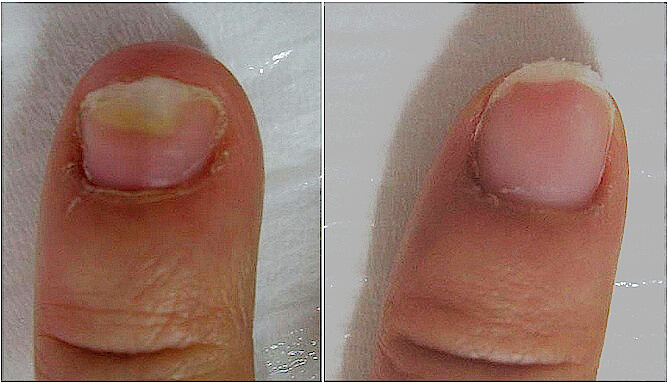
Infected fingernails before and after Fotana laser treatment
Some factors increase the likelihood of having a fungal nail infection.
- Nail damage from tight shoes, biting or tearing nails
- Smoking
- Medical conditions such as diabetes, eczema, psoriasis, or a weakened immune system
- Sharing washing facilities with another person with a fungal infection
- The shared use of nail files or clippers with a person with nail fungus
Treatments for fungal nail infection include
- Topical treatments
- GP-prescribed oral antifungal treatments
- Laser treatment Fitter Feet for Life used the Fotana medical laser which has given excellent results in curing fungal nail infections